Gen-Z voters crave substance, not just social media stunts
Staff Writer
In 2024, Kamala Harris led the first Gen-Z campaign. Tim Walz acted as a football coach, Harris danced up a storm, her legion of fans and supporters created viral edits and videos, and an array of endorsements from popular figures came in. It was a campaign designed to resonate with the youngest eligible voters, a generation born with the internet.
However, she ended up losing the election significantly.
According to Tufts University, Harris gained 52% of the Gen-Z vote, a far cry from the Democratic Party’s 2020 coverage of 65%. Despite attempting to harness positive energy, their great vibes struggled to connect to voters. The Pew Research Center shows that Gen-Z voters prioritize substantive issues—abortion rights, economic stability, and immigration reform.
Instead of unpacking policy nuances or addressing geopolitical affairs, the Harris campaign relied on bite-sized content that often distorted reality. This created two major faults: the oversimplification of complex ideas and an increase in emotional decision making.
This is exemplified by Harris’s appearance on a podcast with Howard Stern, when she discussed the Trump vs. United States Supreme Court case. Their conversation was converted into a 60-second TikTok clip, where Harris said, “The former president is immune to anything you do in office.” This analysis of the president’s official immunity is a major oversimplification of the case and the court’s decision; yet since it was presented in this way with no prior context, Harris and Stern’s portrayal demonizes the Supreme Court, demonstrating how social media often trades nuance for easily digestible outrage.
One of the top comments left on the TikTok read, “Supreme Court justices are domestic terrorists.”
This phenomenon of oversimplification to incite voter outrage was repeated several times. In another instance, Harris commented about Donald Trump sending COVID-19 testing kits to Vladamir Putin, saying, “You remember people by the hundreds were dying…and this man is giving Covid test kits to Putin.” While this comment ignited outrage online, one thought that stays devoid of this conversation is foreign relations: during the pandemic, medical supplies were scarce, so in exchange for a batch of ventilators, the U.S., just like many other countries, sent testing kits to Russia. Beyond the pandemic, this exchange might help with the Biden administration’s attempts to reduce tensions and end the Ukraine-Russia War.
Without including these facts, it is easy to point blame on Trump and the actions of his administration, reacting with one’s emotions rather than reality.
On the other hand, Trump employed a contradictory approach, yet it received significantly more attention. The day before Election Day, he appeared on Joe Rogan’s podcast for roughly three hours—Harris’s longest interview was around an hour. Viewed over 50 million times, the interview showcased Trump as an accessible candidate, even if riddled with misinformation and incoherence. Trump’s appearance gave voters the perception of authenticity, presenting himself as willing to reveal his true self in a way that seemed more genuine, in stark comparison to Harris’s soundbites.
Harris’s campaign misjudged what Gen-Z really wants: not just outrage-driven messages, but leaders who are able to take risks and be vulnerable.
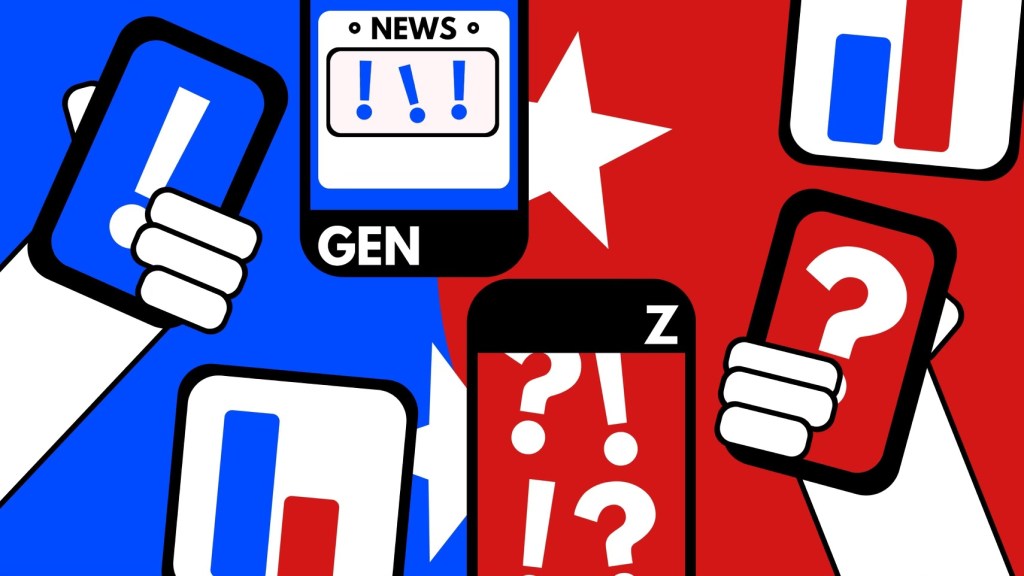
This election, the two presidential candidates employed diverging strategies to appeal to Gen-Z voters, who supported Vice President Harris at a slightly greater rate than President-elect Trump (Art Credit: Kingston Lo (12)).






Leave a Reply