When it comes to spring break, the better choice is earlier and more effective for students
March, not April, is the obvious choice for a well-timed and well-deserved spring break. Schools that schedule spring break in April are doing their students a disservice rationally and academically.
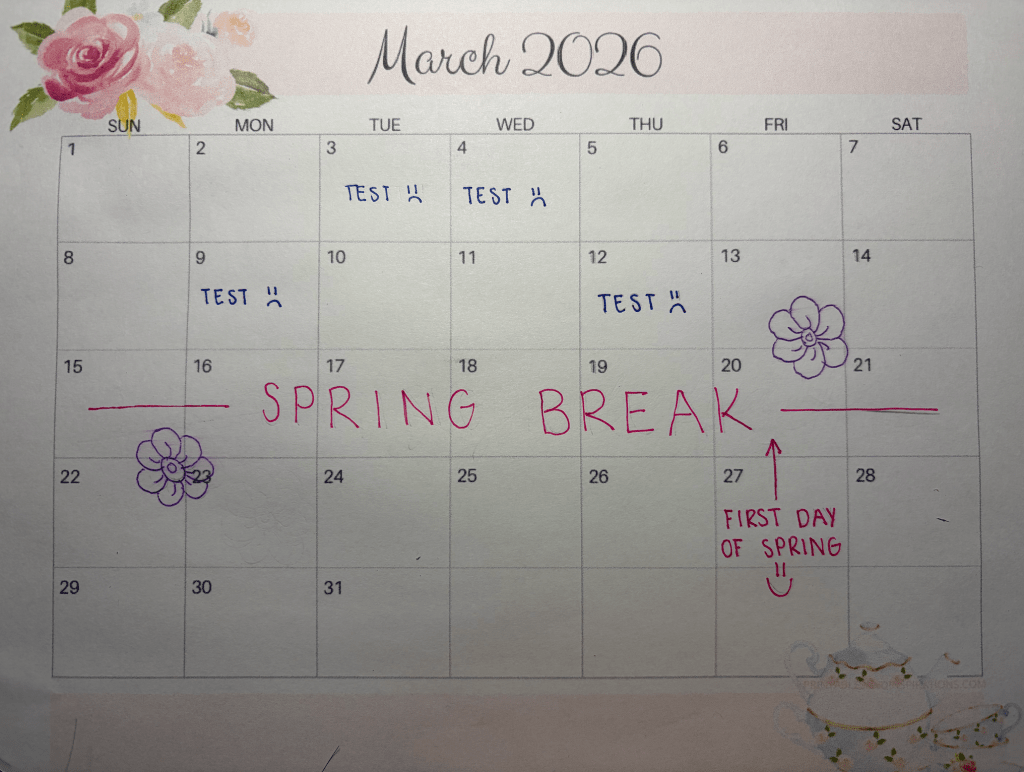
From a purely logical standpoint, March fits better for spring break because spring officially begins in March. According to The Old Farmer’s Almanac, the first day of spring is marked by the spring equinox, which has historically fallen between March 19th and March 21st. The weather begins to reflect this change from winter to spring as well. According to The Weather Channel, temperatures are finally hitting the high 70s and low 80s in mid-March in Fremont, creating the first real taste of spring after months of colder weather. After months of gray skies and cold mornings, March feels like a turning point. That’s the kind of moment that spring break matches.
“The weather in March is perfect for break. It’s the time where you can actually go out to the beach, hang out with friends, or just enjoy being outside,” said Ruchita Deshmukh (12).
By April, that sense of transition is already gone. Spring is no longer arriving; it has already arrived.
March is also better timed for students’ academic schedules. The stretch between winter break and April is simply too long. Once January ends, the second semester quickly turns into a nonstop grind, and occasional Mondays off do not meaningfully decrease stress. By the time April rolls around, students are already studying for AP exams or finals. At that point, a “break” hardly feels like one.
“Last year AHS’s break was in April, and I remember spending the majority of the break studying for finals and AP exams. I would prefer a break in March, because then I can actually relax without having to worry about the impending doom around the corner,” said Deshmukh.
Instead of relaxing, students spend the break in April catching up, stressing, and thinking about everything waiting for them once school resumes; it ceases to be a restorative break.
Timing matters even more in March because of Daylight Savings Time. Losing an hour of sleep is bad enough, but in the middle of an already exhausting semester, that lost hour can make everything feel worse. Students are more tired, less focused, and more irritable, and all the while, they are still expected to perform at the same level. A break during March offers a chance to recover exactly when students are being stretched thin.
“Mid-second semester is when everyone starts to get burnt out, and having a break at that point is perfect for everyone to reset and come back to school fresh and ready to learn,” said Deshmukh.
March also offers a clear advantage in terms of religious neutrality. April breaks are frequently connected, directly or indirectly, to Easter, even if not always openly stated. That creates a schedule that feels centered around one religious tradition, and in a student population as diverse as that of AHS, this matters. If public schools are meant to serve everyone, their calendars should reflect the Constitution’s promise of religious neutrality, not the timetable of one faith’s tradition. Public schools, after all, are supposed to remain neutral on matters of religion. A March spring break does not carry the same religious association. It’s more neutral and thus more appropriate for a public school system meant to represent students of every background.




 Eagle Era
Leave a comment