Opinion: A hit piece on the most overrated author of all time amidst calls for a more diverse reading curriculum

Anika Aggarwal

Staff Writer

     I really hate reading Shakespeare. Touted as the greatest writer of all time, Shakespeare had an incredible influence on English language and English literature. Despite his influence, his plays are no longer relevant for our English classrooms and should be the first to go when we replace them for a more diverse reading list.

     William Shakespeare was one playwright, only one perspective from one moment in time and space. Much of our time is spent reading his plays, with one seemingly popping up every other year [since as early as 7th grade in FUSD]. Reading only one of his plays would be enough, which brings me to another point: Why are we reading plays that were meant to be watched?

     Shakespeare never intended for his plays to be read, they were meant to be performed and viewed by an audience in a theater. Much of the writing in place was meant to exaggerate what would otherwise not be obviously known in a play setting. Many visual aspects were converted to dialogue or monologue in order to make sure the theater could hear, if not see, what was taking place. This results in poorly aged lines such as “O, I am slain!” when Polonius is stabbed to his death in The Tragedy of Hamlet (Act 3, Scene 4). Actions and setting, in Shakespeare’s time, had to be verbalized, resulting in awkward and wordy dialogues. In addition, the style of language employed in Shakespeare’s plays is now obsolete and outdated. Why force students to read early modern English when even modern slang would be more appropriate for future use?

     Most importantly, many of the common themes in Shakespeare novels are antiquated and poorly varied. The most recurring themes are misogynistic and classist, perpetuating harmful ideologies without correcting them. In The Tragedy of Hamlet, the only two female characters, Ophelia and Queen Gertrude, exist to be harmed by men’s actions, much like the female characters present across Shakespeare’s plays. Women’s deaths are the results of men’s actions in the play, and female characters who defy the gender norms and roles in the play are either killed off or tamed into submission as a consequence. Students do not see themselves in the women of Shakespeare; putting oneself in their shoes only limits the full complexities and potential female characters could have. Moreover, the classist narratives skew our perspectives on history and the settings of Shakespeare’s plays. Nearly all the plays focus on characters from upper class backgrounds: lords and ladies, kings and queens, princes and princesses. The narratives are limited by the immense privilege the characters begin with. The struggles of ordinary people are never explored as their circumstances are mocked instead.

     Instead of expecting high schoolers to identify with Shakespeare’s flat characters, let’s give them a more varied list of books: books with women, people of color, LGBTQ+ people, and other marginalized people taking the lead. Books written by authors from different backgrounds and cultures, and books that challenge the narratives presented to us, rather than those which reinforce them. 

     Shakespeare’s plays have importance, but far too much value is placed on his narratives and perspectives. Educators must reconsider whose voices are the most valuable and insightful for the future generations to read, and understand that Shakespeare will never be able to keep up with our rapidly changing classrooms and society.
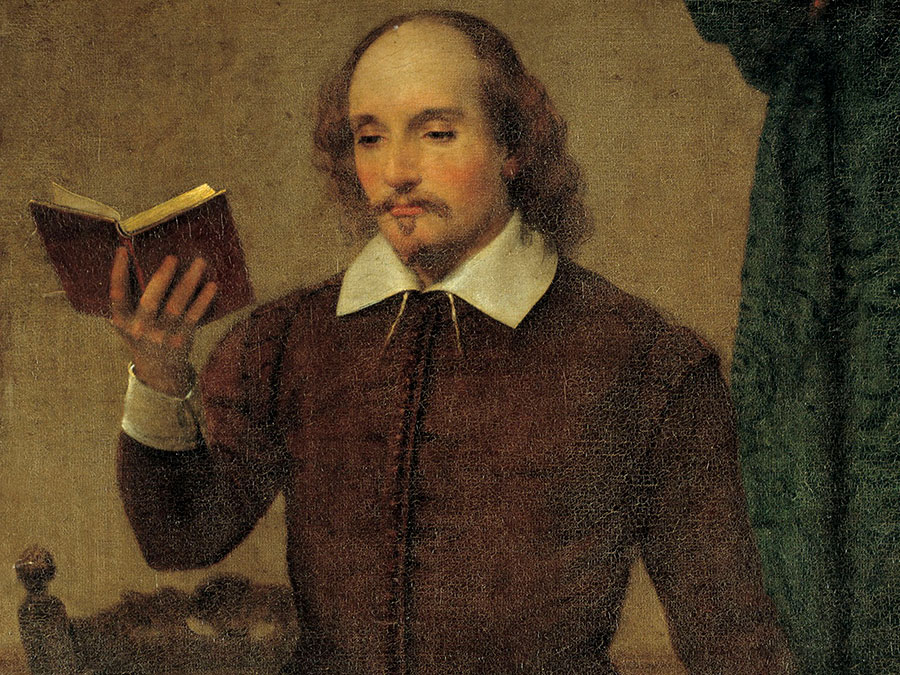
Smithsonian American Art Museum, Washington, D.C.; Museum purchase (object no. 1976.35)

6 responses to “Why I Hate Shakespeare”

  1. dole_ferries.0d@icloud.com Avatar
    dole_ferries.0d@icloud.com

    I disagree with you; Shakespeare has been one of the most influential people to influence literature and the English language itself. For example, popular figurative language like “Break the ice,” “Wild-goose chase,” and “Melted into thin air” were created. He influenced future generations of literature. If you may say he is no longer relevant to English, think about how he greatly influenced the language and authors like Charles Dickens. His writing may be obsolete now, but a ripple in a pond causes a reaction.

    Like

    1. Ok yes, he did bring “popular figurative language”, but those few sayings out way the confusion of other words and themes. Shakespeare’s way of saying “its a cloudy day” is “the heavens are laid down upon by thys godly grey, y cast ith away” (example, not literal). Our modern day english has varied so much, that its starting to become nearly impossible to decipher his writings. Yes once you spend hours, if not days or weeks, analyzing each word, it could become a little joyful. But to get to the joy, you would have to basically rewrite his whole book, and translate it. It is the equivalent of learning a new language. On top of this, now we have confusing words, but also the audience. Sure, go ahead and read it on your own time, but if you give it to a bunch of 6-11 graders, they wont enjoy it. You get angry not understanding it, you start to think of it as a waste of time, and you learn to hate it. Many students hate Shakespeare merely for the fact that (they’re AP students) they cant comprehend what is happening. The audience is wrong, and the way its being taught is wrong. I’ve seen more people go out of their way to buy a translated book, rather than just read the actual class book. With a mic of modern changing English, younger audiences, and the way its being taught in schools, I don’t think his literature will last. Once younger generations become teachers, they will pass on that hate for Shakespeare to others. It is safe to say that his time is over, he influenced many great things, and helped move English to a whole new level, but after so much time, it becomes hard to keep up with it. It becomes hard to understand it, and the enjoy it, and the learn and analyze it. Do I realize just now that I spend 20 minutes on this, and that this post was 4 years ago, yes, but I’m still passionate enough to say it lol.

      Like

  2. There is no reason to study a 400 year old play writer. I learned to despise all classic literature in high school. Nothing taught in a literature class has benefited me as an adult. I just learn to hate it . Literature was one of those obstacles that needlessly got in my way.

    Like

  3. I await breathlessly your curriculum for a high school English class WITHOUT Shakespeare. Can you do that?

    Like

  4. Im going to go back in time and throw hands with shakespeare

    Like

  5. SariNotSorry42 Avatar
    SariNotSorry42

    I fully agree with you. I’m in high school currently, and, as a writer myself, I haven’t found any value in his writing for my own, and that’s rare for me to say. Almost every author I read has contributed some element to my writing. But not Shakespeare. his writings are wildly clichéd, horribly outdated, dense, and, while clever and innovative at the time, serve no relevance to my own life. It’s an insult to the English curriculum that this is a necessity. We should be reading authors and learning writing skills that show us how to make profound writing in modern times, not 300 years ago. And I’m glad that someone finally said it.

    Like

Leave a reply to WingsOfFirefan Cancel reply

Trending