A review of Stranger Things season five
Nearly a decade since its pilot, Stranger Things finally concluded its story with a fifth season that delivers with spectacle and nostalgia—but it is so full of plot holes that it is difficult to call the ending fully satisfying.
Part 1, or the first 4 episodes, was paced carefully and re-established the stakes of the show by introducing new mysteries. Once Part 2 began, that momentum stalled. Storylines that had been set up meticulously were rushed or abandoned entirely.
One of the biggest issues lies with Vecna, the show’s central villain. Earlier seasons developed him as a calculated force within Hawkins, yet his defeat in the final season feels quick and oddly incomplete. As Ashni Mathamsetty (12) said, “I would have appreciated it if they spent more time on defeating Vecna. I felt like it was a little rushed.”
Apart from Vecna, fans were promised a climactic reckoning with a faceoff between the protagonists and the biggest villain of the Upside Down—season 3’s Mind Flayer. In earlier seasons, the Mind Flayer was a terrifying force—a genuine life-or-death threat to Hawkins. Yet, in the finale, its defeat feels underwhelming and anticlimactic. There were no demogorgons, no killer bats, and no threat to the core group other than the monster itself. A 700-foot monster that haunted the narrative for 5 seasons was defeated in under 10 minutes. To put this into perspective, the Battle of Starcourt with a miniature version of the Mind Flayer was an entire 50 minutes long.
Will Byers’ storyline raises even more questions. In the first half of the season, Will developed psychic powers similar to Eleven’s, tying him directly to Vecna and the hive mind. However, when Vecna dies, Will survives without explanation. Earlier scenes made it clear that Will’s connection to Vecna causes him physical pain and can nearly kill him, yet the show never clearly explains why this later disappears, leaving one of its most important arcs unresolved.
Another major disappointment is the complete lack of meaningful character deaths. Prior to the release, Season 5 was heavily marketed as devastating, with creators hinting at “multiple deaths.” Yet, by the end, nearly every single core character survives, significantly undermining the sense of danger that the show spent 5 seasons building.
This choice is even more glaring when juxtaposed with how Stranger Things gained traction in the first place—as a show unafraid to put its characters in mortal peril. Bob’s death in Season 2 upset audiences because he was a kind and innocent character. When Alexei, a fan favorite, was killed, fans were devastated. These moments mattered because they carried permanent consequences. Without that balance of victory and loss, the finale’s win feels less earned and more like plot armor.
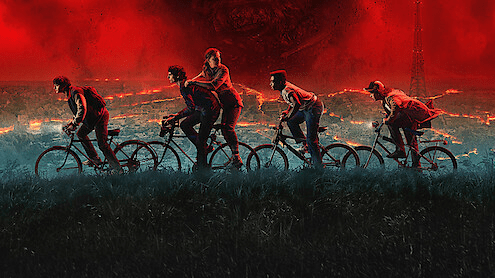
The Stranger Things Season 5 poster parallels the Season 1 poster, evoking the nostalgia that first drew the fans into the show (Photo Credit: Netflix).
The only core character that “dies” is Eleven, and even that ending is ambiguous, seemingly preserving a flexible narrative for the possibility of future spin-offs.
While many viewers were disappointed by this choice, others appreciated it. “I was hoping to see no one die, so I’m glad no one did,” said Adrianna Camarena (11).
Still, the season has some strong moments. One of the most effective scenes occurs when Hopper accidentally shoots Eleven and genuinely believes he has killed her. This moment is intimate and grounded, and Hopper’s horror and guilt restore the shock value Stranger Things was built on. But isolated moments cannot compensate for the broader flaws of the season.
The finale was so heavily criticized that some fans proposed a theory called “Conformity Gate”—a theory that the finale’s seemingly happy ending is actually a manufactured illusion by Vecna, and the real finale would come the following week. While most people dismiss Conformity Gate, the theory’s existence underscores how dissatisfied parts of the fandom are with Season 5’s conclusion.
These issues don’t necessarily make Stranger Things 5 terrible. It still delivers moments of nostalgia and action, but it’s a finale that too often sacrifices internal logic and tension for spectacle and comfort. In trying to stick the landing, the show lets main plot points slip away, leaving viewers with more questions than closure.




 Eagle Era
Leave a comment