Years of dedicated work to bring Chinook salmon populations back to Alameda Creek have come to fruition
By Sachi Ladole
For the first time in over 70 years, Chinook salmon were spotted swimming in upper Alameda Creek in late 2025. Once blocked by a Pacific Gas & Electric Company (PG&E) gas pipeline, these salmon are now returning to the waters their ancestors once called home, bringing hope to the creek’s ecosystem and the surrounding community.
“The water storage dams were a direct barrier to salmon migration,” explained Mrs. Wheaton, an AP Environmental Science teacher who is familiar with the restoration efforts. “As California has so much habitat destroyed by fire, restoring ecosystems is even more important for reducing human and wildlife interactions.”
The comeback was the result of a multi-year project led by PG&E and California Trout (CalTrout). According to Claire Buchanan, lead project manager and CalTrout’s Central California Regional Director, the project was first identified as early as 2002, making the return of the salmon a long-awaited success.
The project involved removing and redesigning obstacles that blocked the fish’s natural migration routes and restoring portions of the creek channel. “[PG&E] buried a new pipeline really deep in the ground—around 20 feet—so there was no more need for erosion control and risk to the pipeline. They worked on this for 10 years,” said Buchanan.
he project targeted both Chinook salmon and steelhead. “Chinook are the first exciting spot, and now the next exciting observation would be steelhead. They are threatened in the Alameda watershed and really do need recovery actions to help their populations,” she said.
The return of salmon will affect more than just one species. Mrs. Wheaton stressed the critical role salmon play in the ecosystem, supporting a variety of wildlife. “Ecosystems are a giant web of interconnected relationships, where all parts are needed to survive. Potentially a full salmon population will support our raccoons, coyotes, bobcat, and mountain lion populations.”
For local students, residents, and nature enthusiasts, seeing the salmon return makes environmental work feel closer to home. “Having a change so close to our community is good for people to see because this is the kind of change we need more of,” said Ruhee Pauls (9), a frequent creek visitor. “These are issues that are going to affect our generation and we must continue to find solutions for.”
The return of Chinook salmon to Alameda Creek is not just a sign of ecological recovery; it represents the result of years of collaboration, patience, and environmental planning. Buchanan highlighted the importance of environmental preservation, saying, “Caltrout’s motto is ‘Fish, Water, People.’ You can’t have one without the others, and that’s such an important thing for younger people to understand. If you want to live in a place where there’s clean water and a beautiful creek to walk around, then it’s really important that we work to keep our waterways clean and free-flowing.”
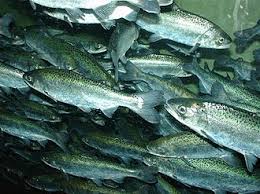
Chinook salmon finally returned home to their natural habitat (Photo Credit: Creative Commons License).

 Eagle Era
Leave a comment