AHS students 16 and older are eligible to preregister to vote
By Sachi Ladole
Across the country, high school students 16 years and older are taking their first steps toward civic engagement by preregistering to vote. Registering to vote in advance ensures that once students turn 18, they can immediately participate in elections.
In California, teens fill out a short form at registertovote.ca.gov to automatically become active voters on their 18th birthday. Students must be U.S. citizens and California residents in addition to possessing a driver’s license, state ID, or the last 4 digits of their Social Security number to complete the process.
At AHS, interest in politics is mixed. Some students follow current events closely, while others barely pay attention. “There tends to be certain kids who follow politics in class, but it’s not one of the top things on their list,” said AP Government teacher Mr. Noori.
Still, he emphasized the importance of fostering political awareness. “One of my top purposes in teaching [AP Government] is to get students more interested in the subject and more conscious about their civic engagement.”
Mr. Noori sees preregistration as a positive step that can help more young people vote. “Registration is one extra step and can be a barrier to voting,” he said. By getting more teens to preregister, they can make their voices heard as young voters of America.
For many, the first reminder of preregistration often comes online. “I’ve heard about it on College Board. There are notifications telling me to register and that I’m eligible,” said Acintya Shenoy (11). She understands College Board’s efforts to increase voter registration but isn’t sure how much it will change participation. “I think it’s good that they are trying to get higher voter participation, but I don’t know how effective it’s going to be—especially with how bleak U.S. politics is right now.”
Shenoy also reflected on the stakes. “If you only have one demographic voting, then the politician who wins is going to reflect a very one-sided view of what America is.” She noticed a wide range of political engagement among her peers. “I know a lot of people who are very politically outspoken and educated on their beliefs, and then there are some people who are very aloof to the political climate.”
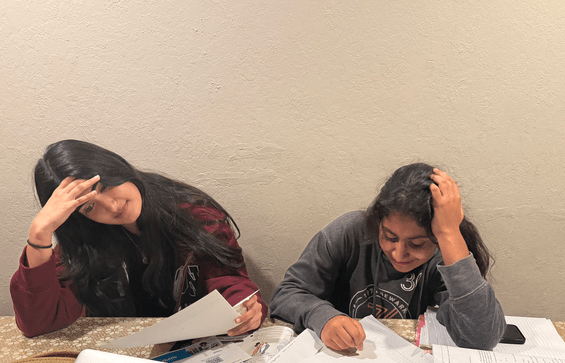
Aashna Bhagia (9) and Henya Dudhwala (9) with a pile of work. Sometimes civic engagement comes with paperwork—and a little stress (Photo Credit: Sachi Ladole (9)).
Some students are still learning about the process. “I haven’t signed up because I didn’t know about it,” said Gyan Singh Kalra (11). However, he appreciated the idea and believes that starting early matters. “I feel like the earlier you get someone into voting, the longer they’ll end up doing it.” Kalra acknowledged that a lack of time due to packed academics and extracurriculars pushes preregistration lower on the list of student priorities.
Preregistration is more than just a form; it can help students understand the value of voting. “I do the best I can to teach them how hard it was for some people to gain the right to vote,” Mr. Noori said. Additionally, he shared how not voting is still participation in the vote. “By not voting, you have to be okay with the decisions of the people who do vote.”


 Eagle Era
Leave a comment