Twelve years after the debut of Zack Snyder’s Man of Steel, James Gunn’s Superman became a breakout success, surpassing Snyder’s domestic box office total in just 18 days.
Superman was initially created as a comic book character during the Great Depression in 1938, a time when Americans were desperate for optimism. His bright costume and unwavering moral code made him more than just entertainment; he became a symbol of stability in an unstable world.
Man of Steel, released in 2013, reflected a different crisis. America was recovering from the Great Recession of 2008. Like the era of Superman’s creation, economic instability was on the minds of citizens. However, in contrast to the colorful comics, the movie leaned into darker aesthetics. “Snyder’s version just really strayed away from what was biblically true about Superman. It makes no sense to make a Superman movie and then color it like Batman,” said Shari Vaidya (11), a student who has watched both versions of the Superman movies. In a time when audiences were already facing real world stress and uncertainty, many viewers were not looking for this gritty take on Superman.
Another variation of Superman presented by James Gunn premiered yet again in a period of political tension. The movie made headlines alongside concerns over economic instability and widespread public anxiety under the Trump administration. Going back to the character’s roots, Gunn’s version is full of color and warmth. It felt unapologetically earnest, even corny at times, but that was exactly the point. Superman isn’t supposed to be grim; he’s supposed to embody hope and kindness.
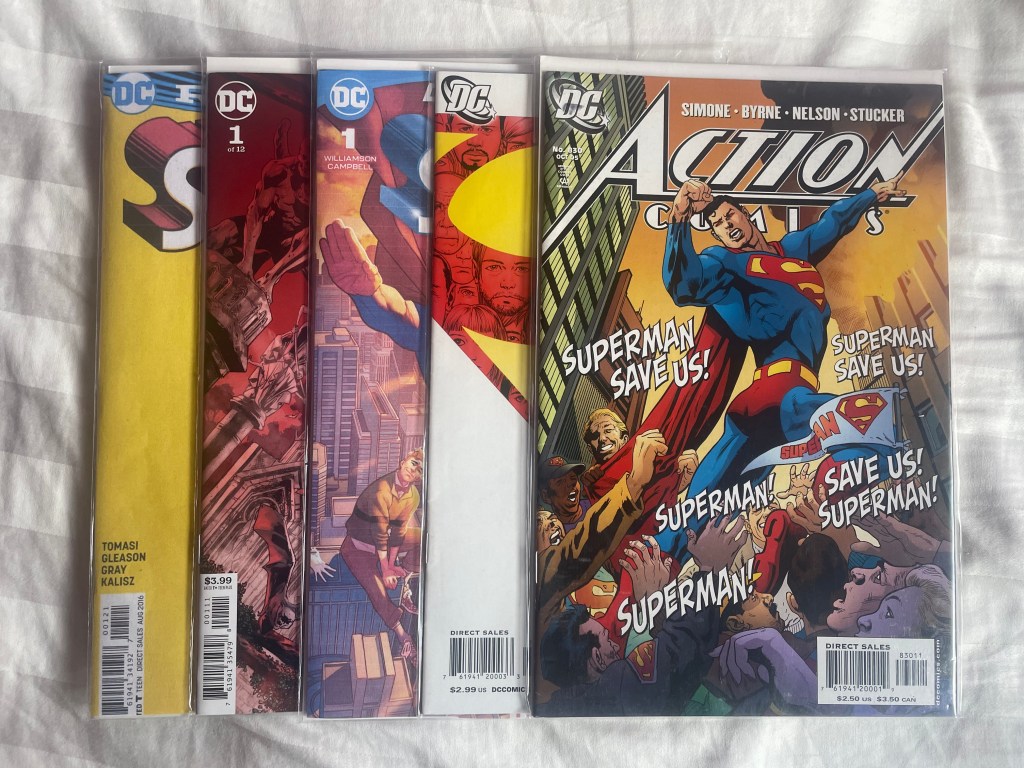
From the pages of DC Comics to the big screen, Superman’s message of hope and his role as a figure people turn to in times of need has endured across generations (Photo Credit: Iniya Prabahar (12)).
That spirit showed up in the film’s central conflict. Superman admits to illegally entering a country to prevent a war, which is the catalyst of the main conflict of the movie. On paper, that’s a violation of international law. But on screen, it’s a reminder of what Superman has always stood for: saving lives beyond all else. That connection to compassion in a world where it often feels absent made the film especially powerful. It gave the movie heart without ever feeling preachy. Vaidya noted that this compassion felt particularly timely. “Right now, we have people debating whether immigrants should be here, even legally. I feel like Superman came out in a moment when empathy has gone down,” she said.
Other viewers stated that Superman’s decisiveness felt powerful compared to the paralysis of modern-day politics. “In this world where politicians have to go through so many holes to make a difference, Superman just did it. He didn’t really think about the consequences, but he saved lives. That really resonates with people in real life,” said Tarun Dilip (12), a DC enthusiast.
The film also made no attempt to hide its parallels with the real world. Viewers quickly noticed the political commentary woven into the plot. “The villain, Lex Luthor, represents governments and companies, especially the military-industrial complex: how they fund wars to benefit themselves, even starting them sometimes,” said Ruhaan Joshi (12). “I saw parallels with Russia and Ukraine, and also Israel and Palestine: one being the aggressor and the other being the victim.”
Gunn’s Superman is a reminder of why the character was created in the first place: to give people something to believe in. “A lot of Hollywood started off as a form of propaganda during World War II. Movies aren’t innocent entertainment. I would argue there’s always some level of indoctrination,” said Mr. Noori, an AP Government, AP Macro Economics, and AP World History teacher. Gunn’s bright and hopeful aesthetic paired with the politically conscious narrative ensured that the film wasn’t just entertaining; it was a mirror for society.



 Eagle Era
Leave a comment