With The Play That Goes Wrong starting production this month, cast and backstage members have begun the extensive process of bringing the show to life. This doesn’t only include the cast rehearsing, but also crew members working on stage design, prop-making, costuming, makeup, and set-building. Last year, the theater department introduced the Production & Stagecraft class, which designated these roles for a class to focus on during the year.
Ms. Benedetti, the drama teacher, acting director, and technical director, created the class last year in hopes of gathering a bigger group of people to dedicate their time toward stagecraft. “The building of the set was mostly on my shoulders. The previous director was amazing as a one-man team; I’m still learning how to do a lot of that.”
According to Radhika Santosh (11), someone who took the class last year, “In the beginning, it was a lot of planning for what we were going to do in regards to the set, the lighting, and the sound for the play. As we got later into the class, it became more about actually doing the tasks themselves.” On the topic of delegating roles, Santosh said, “If you ever feel like you don’t like what you’re doing, Ms. Benedetti allows you to contribute in other ways. There’s a good amount of freedom.”

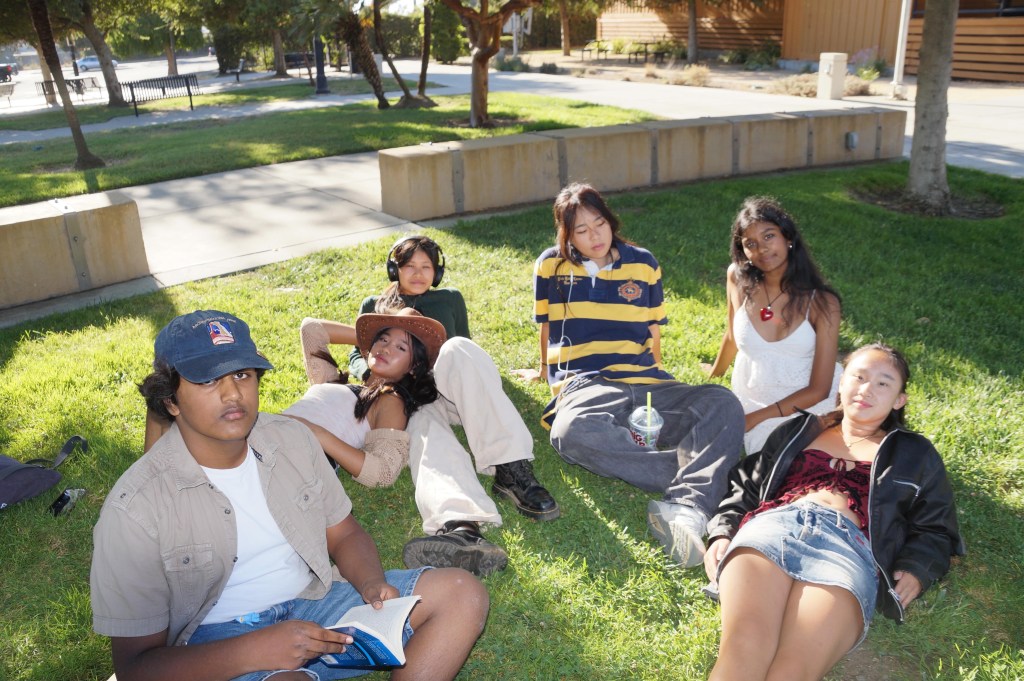
Production & Stagecraft allows for even those not involved in theater to learn more about the ins and outs of the backstage process while still allowing for a lot of creative liberty. “It’s amazing, that sense of community, that really, really comes from that class. Because when they’re not so stressed about thinking about the class itself, they get to enjoy being in it and enjoy being with other people,” said Ms. Benedetti (Photo Credit: Pearl Kyaw (12)).
Theater includes a variety of backstage roles, and the class encourages students to experiment in unfamiliar areas. Pearl Kyaw (12) said, “Taking this class helps me learn more about the ongoings. When I was just doing theater casually, I just knew about my own department. I would just do sound stuff, and I didn’t really know about anything else, so I feel like taking this class makes me a lot more educated in various departments, because if I wanted to do theater as a whole, it would be good to know about everything.”
The fact that the class has had one year to adjust its curriculum raises the question: can it be considered a “standard” class? Santosh said, “I feel like it doesn’t need to be a proper class. I know that Ms. Benedetti wanted a 7th period class because she wanted it to be more setting up the theater versus having it be like, ‘Oh, there’s gonna be this test, and this test, and this test.’ It’s more about learning the behind-the-scenes process of theater.”
The low-stakes nature of the class tends to be its strength and allows students to comfortably learn from their mistakes without worrying about getting penalized. “I would say it provides more opportunities for students to grow. It’s not necessarily that if they don’t get it right away, they’re just going to fail, because they’re literally going to get a tool in their hands, and they’re going to have to figure it out at some point or another. So it’s one of the reasons I really, really like the class,” said Ms. Benedetti.
While the second year of the class has just started, it’s clear that it seems to have gained its footing pretty quickly. Students taking the class are satisfied with the freedom they get and with their opportunities to learn about different aspects of technical theater. By making the design tasks more focused, the process to put on a play becomes more efficient and makes the production more student-oriented. For a system that once relied on volunteers coming in for a few days to paint some floors and assemble some props, the Production & Stagecraft class has helped transform theater into a bigger team effort by adding a lot more hands on deck.
 Eagle Era
Leave a comment