At AHS, the art department faces a challenge every fall as state funding from Proposition 28—a proposition dedicating 1% of the state’s education budget to arts and music programs—does not arrive until around October, starting the year with limited materials.
Unlike many other subjects, art relies heavily on consumable materials, which cannot be purchased until Prop. 28 funds are released. “Funding comes from the state, then the district office, and then to each school. It generally doesn’t get to the school until maybe October. This year, we got it at the end of September,” said Ms. Olson, the co-head of the art department.
The delay isn’t just an inconvenience; it shapes how the first months of classes are run. “If you are able to plan ahead, then you can buy things that you’re going to need for next year. And that’s great. But if you’re a new teacher, and you don’t have those sort of stockpiles already set, it’s really, really difficult to start your year before the funding comes through,” said Ms. Olson.
This has been the case for Ms. Mapelli, who is teaching her second year at AHS and has had to make adjustments to keep her classes moving forward. “We start off using cardboard for projects because that’s accessible material that everyone can contribute to without requiring families to spend their own money,” Ms. Mapelli said. “Even then, we still ran out of glue sticks for the hot glue guns, and I had to buy them out of pocket twice. I’ve spent probably 1,000 dollars out of pocket [in total]. Some of it I have been reimbursed for and some of it I have not.”

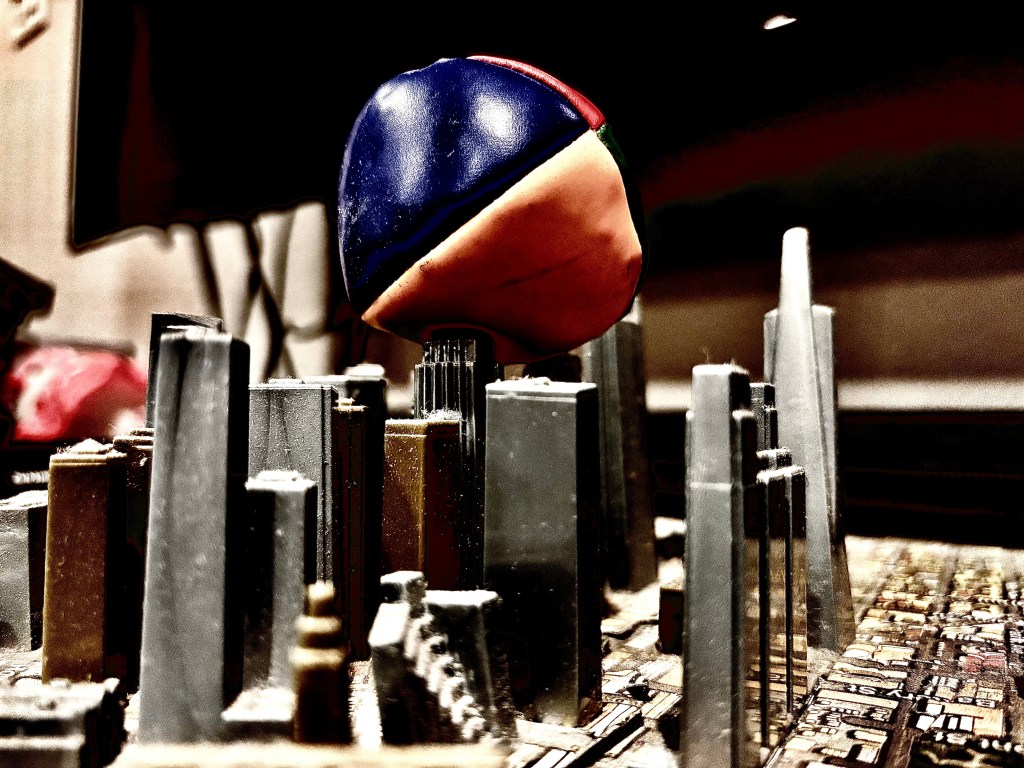
Caption: Cardboard sculptures occupy the shelves of Ms. Mapelli’s room, showcasing how the Sculpture and Ceramics class must adapt before Prop. 28 funds arrive (Photo Credit: Iniya Prabahar (12)).
This shortage shapes how students experience the class day-to-day. “It slows us down because 30 people are trying to use the same 2 glue guns,” said Lillian Dong (12), a student currently taking Sculpture and Ceramics.
Even when funding is released, the challenges don’t end there. “Once the funding has been released into the school, spending it is very bureaucratic,” said Ms. Olson. “As a teacher, you need to use only specific vendors that are approved, then it goes up the chain to the district channel, and it takes a long, long time for things to get here. So even though we get the funding in the end of September or early October, you don’t necessarily get what you’re ordering until later, until maybe November.”
The cost of materials adds up quickly, especially in a class that requires so many materials such as Sculpture and Ceramics. “We use a lot of clay, glazes, and various tools, but I would say a good chunk of the money goes towards clay, which is roughly 30 to 35 dollars for a 25 pound bag,” Ms. Mapelli said. “With 170 students total, we could be using 15pounds of clay per person. So the money really, really adds up.”
Even with these challenges, students and teachers emphasized the importance of art programs at AHS. Art electives provide students with opportunities to explore creativity and discover new interests, offering balance in a school where STEM programs are often prioritized. As Ms. Olson said, “I think art education is really important for building critical thinking skills, analysis skills, and evaluation skills. All of those things are really important.”

 Eagle Era
Leave a comment