How junior Suhani Lad’s passions have helped her develop a uniquely blended cultural identity
Staff Writer
As we high school students emerge steadily into adulthood, we all must encounter a particularly daunting task—being pulled in every direction by the opposing perceptions, values, and ways of life of those who surround us as we try to find ourselves. Yet, the creative pursuits of art and singing, which started off as simple, pleasurable pastimes for Suhani Lad (11), have shaped her unique, personal identity—blending cultures that sometimes seem to contrast.
“When Suhani was very young, we introduced her to art and Indian classical music classes,” said her parents Sheila and Paresh Lad. “We used to encourage her, buying color pencils [and other art supplies] as birthday gifts, and she kept [nurturing] her interest,” said Mrs. Lad.
Over time, it became Lad’s own drive which pushed her to continue these passions, coinciding with a deeper appreciation of how they connected her to her roots. Music, in particular, has become Lad’s bridge to her culture. Her older sister, Ragi Lad (AHS Class of 2019), described, “The [Indian classical] songs that she sings give her a better understanding of the language, of how rich Indian art forms can be, which has given her more of an appreciation for our family history [and traditions like] Indian holidays, clothes, food, and music.”
Even with this outlet, it still was not initially easy for Lad to embrace this appreciation. “For a long time I never really identified with that part of myself. Art was easier to talk about because everyone knew about it, but Hindustani classical music can be overshadowed by Western music, so I was never really comfortable talking about it,” recounted Lad. “But once I realized how beautiful it was and how it was tying me to my roots, it became a big part of me.”
Lad attributed this beauty to the unique way in which Indian classical music allows her to express herself. “With the type of singing I do, there are different Raags [or specific structures of notes and their patterns], each of which represent different moods,” explained Lad. “Some have more ominous tones, while others are more happy, so whenever I’m having a hard day, singing is how I can let my emotions out.”
Once she grasped the basics, Lad began to take more control over her singing journey. “Suhani is very spiritual and religious, so now she can improvise on her own with other songs which she sings at her temple, building on her skills from my class,” described Lad’s singing teacher, Sejal Joshipura. “She is trying to learn a lot of things on her own as an independent musician. In the future, I’m sure she will incorporate both Western music [which she also loves] and spiritual music [in her journey].” As such, music has become Lad’s way of figuring out her own balance between her traditional culture and Western identity, appreciating the unique elements and value that both provide for her.
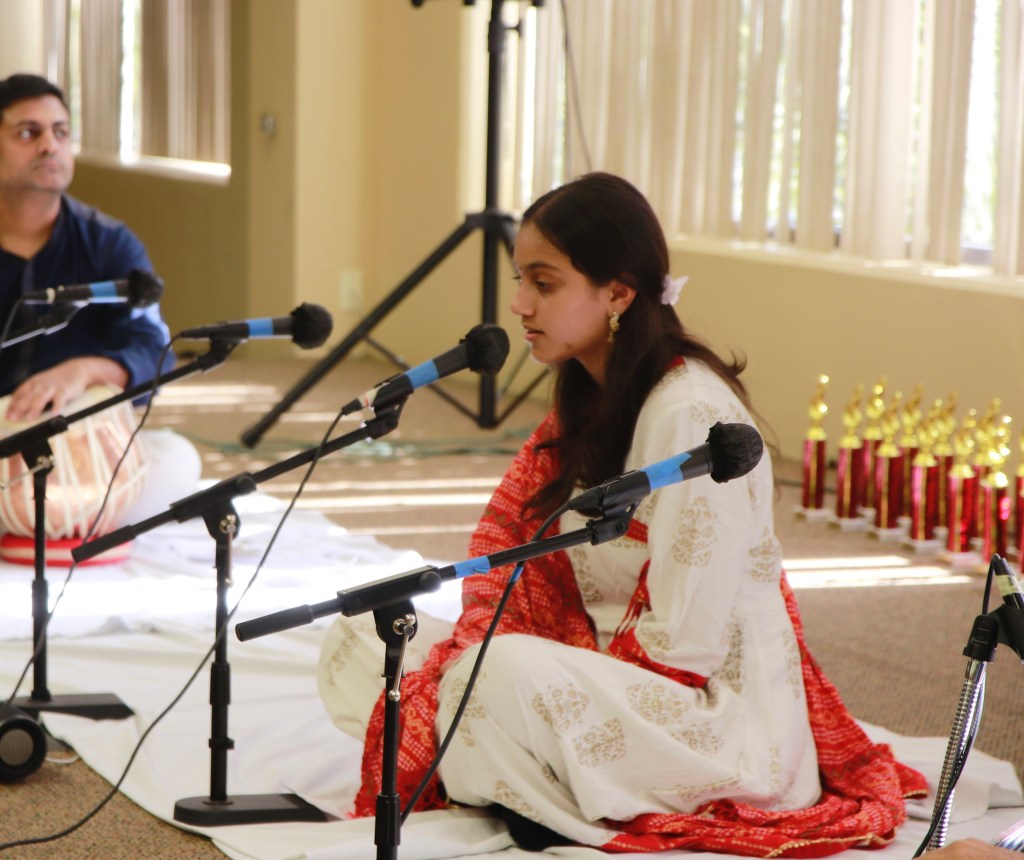
Lad has participated in many Indian classical music recitals and competitions. “With singing in particular, it has roots to my culture and religion,” described Lad. “So I feel like if I stop singing, if I lose that, I’m going lose those parts that connect into my culture” (Photo Credit: Suhani Lad (11)).
And still, Lad must navigate through another, more subtle culture war while finding her own identity. Especially in the Bay Area, where academic competition and ambition are at their peak in junior year, Lad is still figuring out how her passion for art fits into a culture so entrenched in academics.
This culture is perhaps most easily visible with a look at the course schedules and loads students take on for themselves each year. “I see a lot of people in the school with peer pressured schedules. There are kids taking 5 APs, who are incredibly smart but they’re also prone to burnout, dedicating their whole year to school,” observed Neeti Shah (11), Lad’s teammate on the AHS girls tennis team. “In terms of the choices Suhani has made, I think she has always been very clear that she wanted a balance, even [with] her schedule. She has some classes that are more therapeutic and some are more [academic].”
In fact, Lad plans on taking AP Studio Art next year as a senior to further cultivate her creative side. “From a purely academic standpoint, there’s no need for that class. But Suhani’s mindset is that there is no other time she will get this opportunity and that it is a fun class she wants to take,” explained Lad’s good friend Aarna Gokarn (11). “Suhani and I have talked about how we feel like everybody is just being performative for college, but [for her], not everything has to be about just getting into a good college.”
Lad’s older sister credited this mindset to the way Lad was raised. “Our parents obviously expect us to do well in school to [set us up for a] good future, but they have given both of us a lot of space to have time with our friends and just do teenager things, assuming that we don’t put school on the back burner,” she said.
Yet, Lad herself has high ambitions for her future career, wanting to pursue medicine; as such, a tension still exists between these different parts of herself. “Yes, she views this whole system of academic achievement as a little flawed, but at the same time, she’s trying to fit into it; she has that drive to [pursue higher education],” summarized Shreya Pawar (11), who has been friends with Lad since childhood.
“I’ve debated how my art will tie into my future plans with myself thousands of times, questioning how to connect these two big parts of my life,” admitted Lad. “Academics are important to me but they will always be there. [I don’t want to just] be a monotone, completely black-and-white person, so my end goal with my art is to not stop. For the longest time, I saw these two sides as very different parts of me—my creative side and my academics side. But eventually I realized that it can be one cohesive identity, and it’s so much easier to live that way.”
Navigating through the many different layers and nuances of identity—whether in terms of ethnic background or simply different attitudes on life—has never been easy; the contradictory nature of different parts of ourselves often produce uncomfortable or uneasy self-perceptions. Lad, however, has embraced the paradox, finding one commonality within every part of herself: they are all uniquely and unapologetically hers. She reflected, “I think junior year is a year where everyone starts questioning themselves, but these passions are always going be there for me—they are a sense of comfort for me. Art and singing have become such a big part of me that I feel like if I lose them, I’m going to lose myself.”

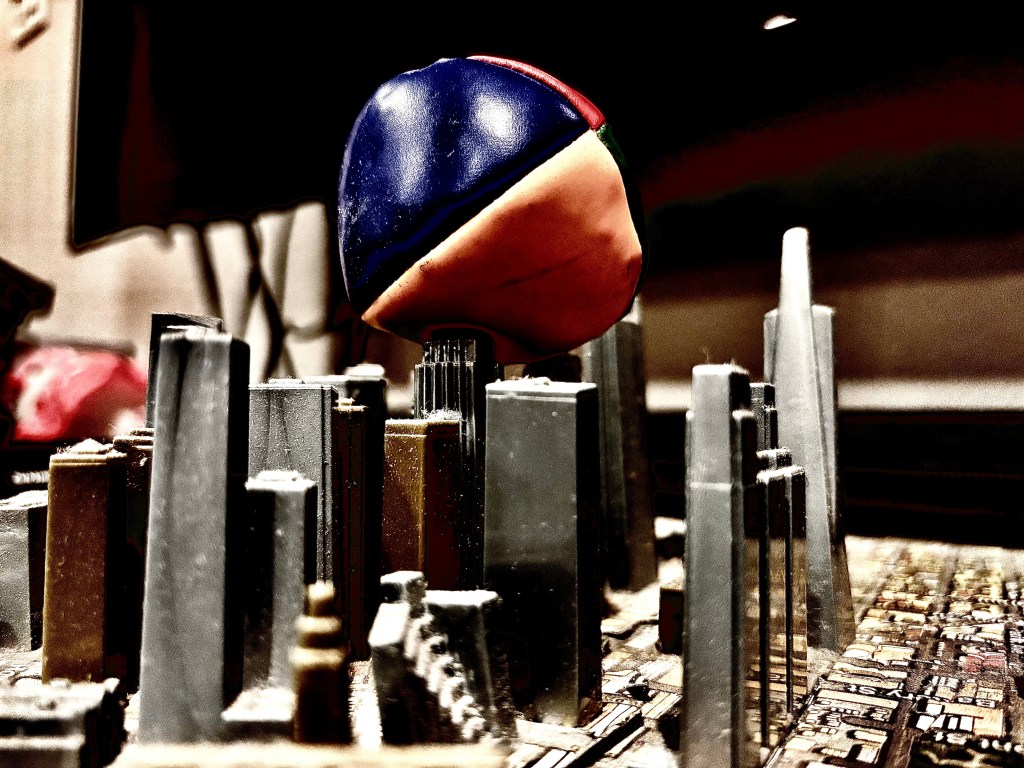
As Lad progressed technically with her art, she began to experiment stylistically with different mediums, incorporating both traditional and Western influences through her paintings. “Replicating others has always been a large part of learning art,” explained Lad. “But when I started finding my own style, my art became my own. I realized that people are not just interested in art, but that it helps them look inside themselves, and that was a pushing factor for me to do my own things [with art]” (Photo Credit: Suhani Lad (11)).

 Eagle Era
Leave a comment