
A former editor reflects on his time at the Eagle Era
The media is hurting. Journalism is bleeding out. We are not at the peak of division or polarization in this country, but we’ve been scaling that mountain for quite a while. Consequently, I hear the word “Journalism” spit more often than spoken.
So, it’s no surprise that according to the Gallup poll “Americans’ Trust in Mass Media, 1972-2024,” a historically low 31% of Americans, have a “great deal/fair amount” of trust in mass media reporting news accurately. Americans no longer trust journalistic institutions to fact check with integrity and eliminate bias (though this was never possible).
This institutional distrust extends to the AHS community, and a healthy layer of skepticism must be applied to any publication, especially student-run newspapers.
The Eagle Era is an institution, and everyone in our newsroom is responsible for maintaining integrity in our coverage. Therefore, every misprint, piece of missing context, or other oversight represents a collective failure to prove the worth of our newsroom, to maintain the trust of our community. These mistakes are known to every newsroom in existence. Yet, shared imperfection does not excuse our mistakes.
The only way for this newsroom to limit its offenses against our community is for it to create and maintain a culture of interconnected journalistic integrity.
Walter Lippman, America’s model trailblazer of journalistic integrity, though ironically a subpar journalist who spread misinformation, was correct in his criticisms of the media’s integrity.
After America’s late 19th century phase of Yellow Journalism, in which journalists would frequently and shamelessly manufacture facts to emotionally manipulate their readership, Lippman argued, “rather than declaring themselves objective, journalists must accept that they are not,” then prevent this from compromising their critical thought, as written in Wesly Lowry’s “A Test of the News.”
I don’t pretend that we have eliminated bias in our newsroom, as to pretend it is possible to eliminate bias is to invite unwelcomed bias masquerading as moral righteousness or objective truth into our coverage. My own bias is well communicated in this article, because the trust of the public is invariably linked with my—and every other journalist’s—ability to serve the communities that we cover. Additionally, any journalist who does not fervently believe that their role is and should be an essential part of the community should not be a journalist.

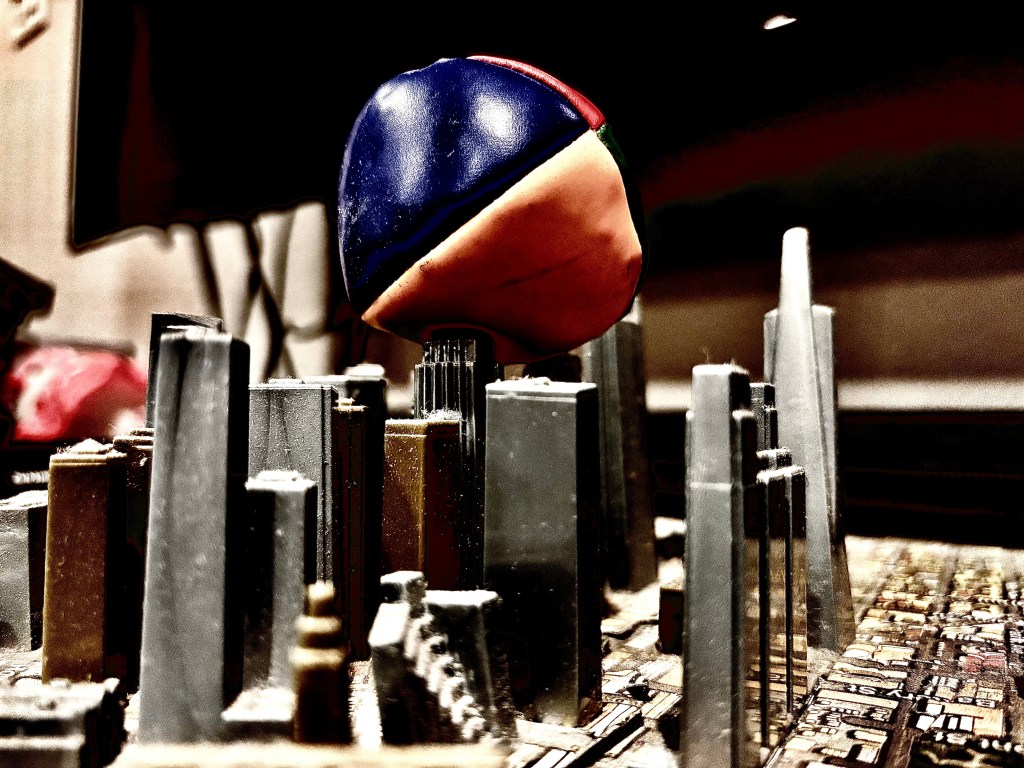
Journalistic institutions have lost the trust of the public by failing to maintain cultures of interconnected journalistic integrity, and without the trust of the public, they cannot effectively operate (Photo Credit: Daniel Davis (12)).
Those in our newsroom must hold ourselves accountable not only for our own actions, but for the actions of our fellow journalists. However, the Eagle Era needs help, as no institution can be trusted to be its own check. We need a community that calls us out when we miss the mark, because when that community is silent, distrust festers. Growing distrust leads to uncommunicative sources and diminishing readership, and you can’t serve a community that doesn’t exist.
Journalism is a field of servitude through informing and record keeping. Hours of research, interviews, and writing can only benefit the community—now and in the future—if the community is invested in its coverage.
Again, a blind trust in any institution will undoubtedly lead to disaster. We don’t need blind trust. We need your trust that we are committed to filling our blindspots, and we need to trust you to be skeptical with the end goal of improving AHS.
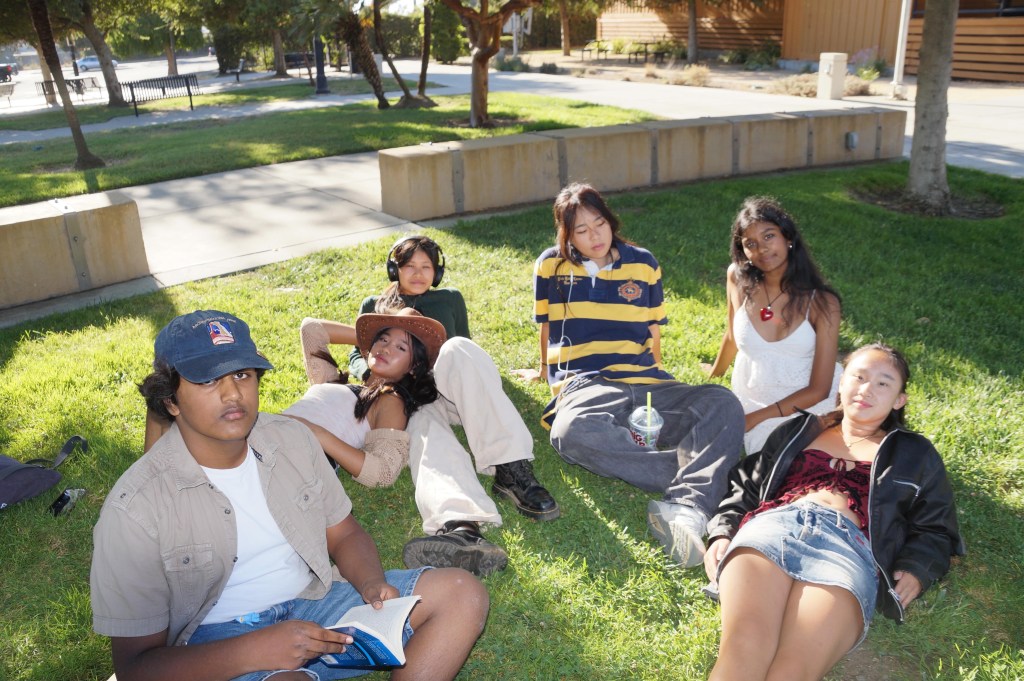
While I have been adamant that there are logical reasons to distrust the paper, my time as a staff writer and editor has shown me that for every one of its mistakes, the Eagle Era has countless pieces that inform and uplift. I’ve had the privilege of working with Amrita, Emaan, Muhammed, Nanki, Rohan, and Royden over the past two years. Each day, I become increasingly more convinced that this group’s intelligence, creativity, and—above all—commitment to living journalism has made my time at American worthwhile.
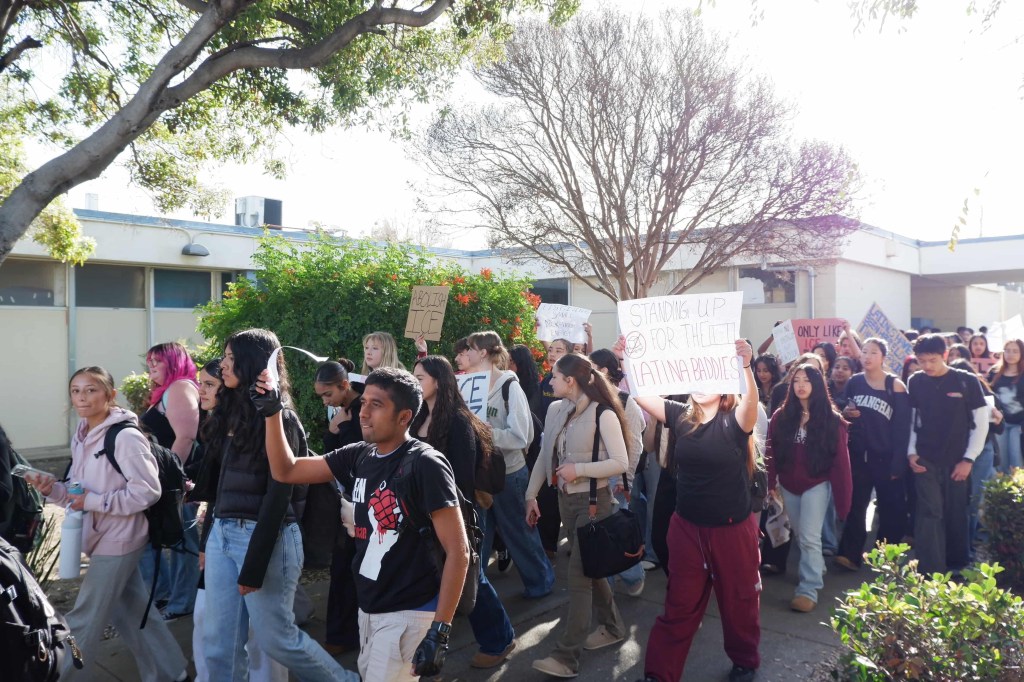
In most cases, our responsibility is to our fellow students, often placed in vulnerable positions. Faculty inherently inhabit positions of authority over their students. Accordingly, our role is to check this power imbalance, and we fill this role every time we amplify student voices.
Regardless, while our articles will stay at American, we won’t. I have a special connection with this group, but this connection was sparked by our collective commitment to the field, to foregore sleep and time in order to fulfill our responsibilities in our newsroom.
Unsurprisingly, I witnessed this same commitment, two years ago, in my first editors. This passion begins with the heart of this newsroom’s ability, our instructor, Mr. Savoie. His addictive enthusiasm for ethical journalism, as well as his commitment to truly let the Eagle Era be student-run, cements in its staff the concept that it has a responsibility, and it needs to work diligently to realize this objective. I have witnessed the new editorial staff growing and coming to this very understanding. conclusion.
We have an involved and concerned community. We have a dedicated and committed newspaper. What we don’t have, however, is an excuse for the two to avoid conversing earnestly.

 Eagle Era
Leave a comment