
The significance of International Walk and Roll to School Day
Staff Writer
The morning air is cool and crisp and the usual surge of cars honking and squealing at the drop-off zone is instead replaced by the rhythmic hum of bicycle tires and the enthusiastic chatter of students walking hand in hand with all their friends. Backpacks bob up and down with every footstep and the traffic guard greets a steady stream of students. It seems like a particularly peaceful morning, but something is different. It is International Walk and Roll to School Day, an event where countless students worldwide ditch their cars and pursue a more active way to get to school.
The International Walk and Roll to School Day is always in early October, with this year’s International Walk and Roll to School Day being on the 9th. According to Shiven Patel (10), this event aims to reduce pollution through biking or walking to school. “International Walk and Roll to School day encourages students to walk, bike, take transit, or use other non-motorized transportation to get to school,” Patel said. “It promotes a healthier environment through alternative ways of transportation to school such as non-motorized vehicles, reducing carbon dioxide emissions and contributing to creating a sustainable environment.”
Similarly, Julie Mirshad, the AP Environmental Science and Living Earth teacher, elaborated on the advantages of alternative transportation methods for the ecosystem. “This event makes people contemplate other modes of transportation other than just hopping in your car for everything that is close,” Dr. Julie said. “By not just jumping in your car and choosing a different form of transportation, we would be creating less pollutants, and this event can help create a healthy habit of using alternative means of traveling.”
Despite the benefits toward the ecosystem that this event brings, Dr. Julie also suggests that participation in this activity may not be feasible for certain individuals. “I would acknowledge that some students do live far away, and some teachers live really far, so they don’t have much of a choice,” Dr. Julie said.
Abhinav Shivalli (10) who has participated in this event before, added that the event benefits people in ways beyond reducing emissions. “Even though reduced pollution is a big effect of this event, it is important to take a look at other positive effects. For example, with less cars on the road, there is less traffic and thus less danger for students. Plus, walking or biking to school pretty much guarantees physical activity for five days of the week,” Shivalli said.
Additionally, Patel claimed how ditching the car can also be pleasurable to many. “Walking instead of driving isn’t just good for the environment, it is so much fun as well,” Patel said. “Who doesn’t enjoy walking with their friends while goofing off every once in a while?”
Walk and Roll to School Day is not just an opportunity for students to take steps— figuratively and literally—toward a cleaner and more sustainable future; it is also an opportunity to establish deep connections with others and have fun. Although it is just a single morning out of 365 each year, it demonstrates the potential that communities have, where students safely navigate to school while keeping the environment clean, setting a precedent for the future and demonstrating what could eventually become daily life.
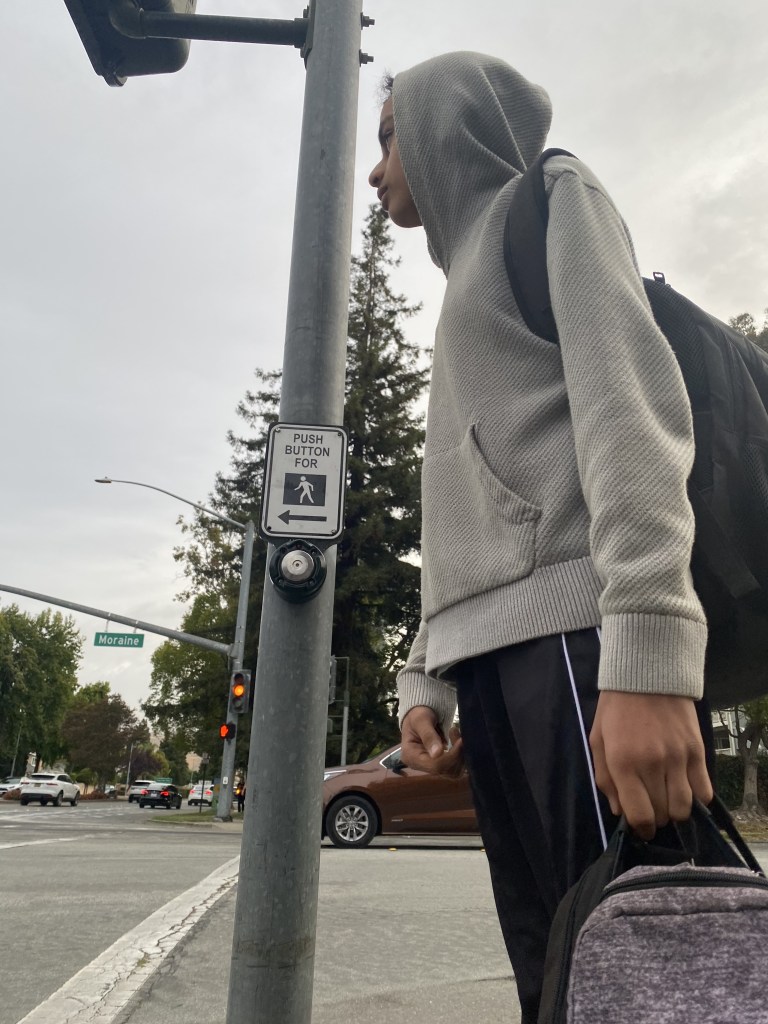
Caption: Shiven Patel (10) walks to school instead of taking the bus or driving to school, contributing to reducing pollution. Abhinav Shivalli (10) said, “Seeing Shiven walk to school really inspired me to walk as well and contribute to a greener environment.” (Photo Credit: Ryan Liu (10))


 Eagle Era
Leave a comment