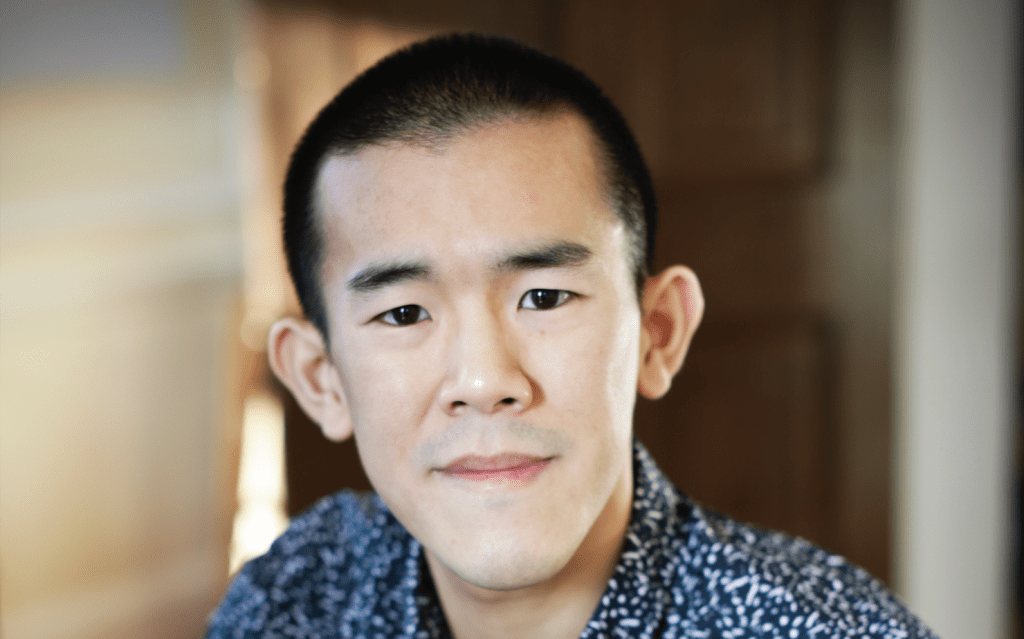
Pulitzer prize-winning science journalist Ed Yong shares his journalistic process
News/Sports Editor
Like many Bay Area residents, British-American journalist Ed Yong was initially academically geared towards STEM, but Yong now praises an interdisciplinary process that has led to widespread success.
“I was actually meant to be a scientist. I’ve always been interested in science. I graduated with [a biochemistry] degree and started a PhD program, but then very quickly realized that I was much happier writing about science than actually doing it,” said Yong. “So I dropped out [of the] PhD program and started writing.”
Yong, journalism fact-checking institute Pontyer’s “most important and impactful Journalist of 2020,” described his first step in covering a topic or event. “Something stokes my own curiosity and makes me interested in the world,” said Yong. “I’m writing about parts of the world that are really important, but sort of hidden from our view.”
Yong was awarded a Pulitzer Prize for his unique coverage of the Pandemic and tendency to seek out the “hidden.” “To really understand the pandemic, you need to not only understand epidemiology and virology, but you need to understand history, ethics, sociology, anthropology, and psychology. That’s true for many of the big stories and existential crises of our time,” said the author of “How the Pandemic Will End.” “You can’t understand them simply as problems alone. That gives you a very partial view of the world. Embracing different areas of expertise, lots of disciplines, is the way forward.”
To any AHS students who wish to avoid narrow scopes, Yong said, “Read widely when you work on stories, interview widely, try and find as many sources in [as many] different kinds of places [as] you can. Don’t just get locked into one area, one group of people.”
Next comes putting the piece together. “Writing is not this nebulous practice that you either do well or you don’t. Writing is just intentionality times practice,” said Yong. “So from the level of a sentence to the level of a chapter or book, when I write, I’m very deliberate about which bits of information I include, which I leave out, what I lead with, and what I keep for later.”
The twice New York Times bestselling author said, “I think [my voice built] gradually over time. Some of it is influenced by the great writers and communicators who I resonated with. I grew up watching David Attenborough documentaries. And then a lot of it is just intuition.”
Yong’s process has won accolades such as the George Polk Award for science reporting, the AAAS Kavli Science Journalism Award for in-depth reporting, and the Pulitzer Prize for investigative journalism, but education, not recognition, is his motivator.
“I think the success is almost immaterial. I almost don’t care. I’m just trying to protect the integrity of the work,” said the science journalist. “To be honest, it certainly helps. It’s a nice title, a nice descriptor on my book cover, which I’m sure makes it a little bit more sellable. But ultimately, the award was awarded for a body of work, and that’s what I think matters. I just want to do good work and then leave it alone.”
“I think if that body of work tells us anything, it tells us that doing deep coverage that actually addresses questions and problems that people have, coverage that aims to be an act of service, that helps people root themselves in times of chaos, that helps to shine a light on underserved populations,” said Yong.
However, Yong sees a barrier for journalists to complete this work. “Sometimes we get caught up in almost producing work for its own sake. It just creates more and more content that’s small and fragmentary,” said Yong
Above all else, Yong credited his coworkers for combating this culture and creating an environment at The Atlantic where his success was possible. “I was given very free reign by my editors to take these big swings. I was told ‘take the time you need and do the big stories that are going to matter,’ and that’s what I did,” said Yong. “Having that environment that makes those stories possible is crucial. This is another reason why I sort of push back against the focus on prizes, because they’re usually awarded to individuals. It’s the group of people I worked with: the editors, the fact checkers, the copy editors, the artists, the audience team. All of them who made that work possible and who gave me the space and time I needed to do my best possible work.”
Yong said, “If other publications look at that type of coverage and think ‘yes, that’s what we want.’ Well, you’re going to have to create an environment where that’s possible.”

Caption: Science Journalist Ed Yong is most well-known for his Pulitzer-Prize winning coverage of the pandemic, but Yong credits both his process and his environment for his success. “Just getting the chance to step back and take the biggest possible swing in this case, really worked. I hope more journalists will do that and I hope more publications will give them the opportunity to do it,” said Yong (Photo Courtesy of Penguin Random House Speaker’s Bureau).


 Eagle Era
Leave a comment