The San Francisco theater’s renovation plan sparks conversation on gentrification and LGBTQ+ history
Staff Writer
Located in the heart of one of the country’s most high-profile LGBTQ+ neighborhoods, the Castro Theatre has long stood as a beacon for LGBTQ+ art and allowed independent film festivals to thrive. The theater has been owned by the same family since 1922 and is San Francisco’s 100th historic landmark, meaning a century of moviegoers have found home in its flickering screen and ornate architecture.
“The Castro Theatre is like a sacred temple for the community,” Castro LGBTQ Cultural District board member Jesse Sanford told NPR. “It’s where we gather to laugh together, cry together, learn our history, and mourn our losses.”
In January 2022, Another Planet Entertainment took over management and confirmed plans to transform the Castro into a multipurpose venue. A key feature of this proposal is replacing the fixed seats on the orchestra floor with motorized platforms that can remove seating when concerts are hosted. The company secured city officials’ approval in 2023. Yet, a movement to change the theater’s fate continues to unfold at San Francisco’s City Hall.
These plans have not been received warmly by all members of the community, prompting rallies and an online #SaveTheSeats campaign which points to the theater’s history as a reason to restore, not renovate it. In response, The Castro Theatre Conservancy, a community organization whose mission is to protect the theater “as a cultural and entertainment venue for motion pictures and live performances,” announced the creation of the “Save the Castro Theatre” campaign. Around 12,000 people—including celebrities such as Francis Ford Coppola, Steven Spielberg, and Martin Scorcese—signed their petition to prevent the renovations from proceeding.
Some have called it “gentrification,” to turn the theater into an exclusive venue, in concern that it might “price out LGBTQ+ events or the City’s many independent film festivals that call the Castro home.” Rob Byrne, a member of the Castro Theatre Conservancy told CBS News, “To convert this space into a single-use function venue that’s only good for live music, with flat floors and no seats, and operates only a couple days a month, it’s simply just a crime against the city of San Francisco.”
However, the theater’s website states that it “simply cannot continue to operate this way.” The designation of “historical landmark” protects the theater from external demolition but does little to preserve the interior. Additions like a new ventilation system and Americans with Disabilities Act upgrades, featuring ramps and accommodations for wheelchair-accessible seating are necessary. Opening the theater as a concert venue would make it more sustainable than keeping movies on in the age of cineplexes and streaming services, a strategy many theaters such as the Warfield in San Francisco have undertaken.
The seats have been such a bone of contention that the Board of Supervisors had to get involved. By a small margin, the Board passed an amendment allowing them to be removed. The decision, however, still needs final approval from the city’s Historic Preservation Commission and may be delayed if opponents file an appeal.
Supervisor Joel Engardio argues that it is the people who bring the theater to life, not the physical seats. “That’s why we must create spaces where a new generation can make new memories in a magnificent old building outfitted for the future,” he said. “A theater completely preserved in amber and closed will not help the Castro neighborhood. A thriving theater will.”
According to APE, they are safeguarding the neighborhood’s crown jewel and laying the way for it to remain open for another century. But for many who love it, the Castro is a church, and changing its seating would be similar to painting over the Sistine Chapel. In either case, the famous Castro Theatre will be a part of the San Francisco experience for future generations, whether as a multi-use community facility or a film sanctuary. The San Francisco Board of Supervisors might make the ultimate decision about its future in April.
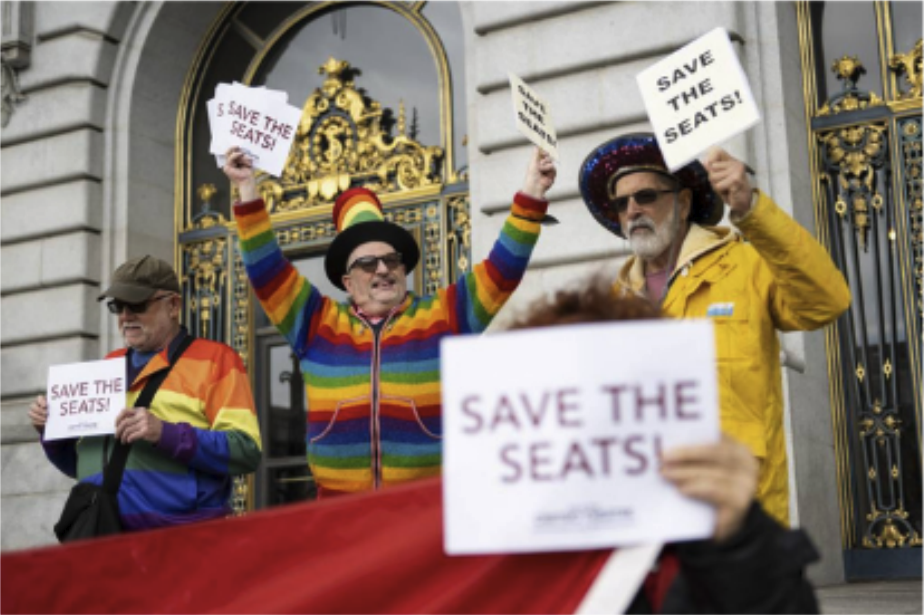
Caption: A protestor holds up a sign during a rally at City Hall in San Francisco in June opposing the plan to remove fixed seating at the Castro Theatre (Beth LaBerge/KQED).


 Eagle Era
Leave a comment